
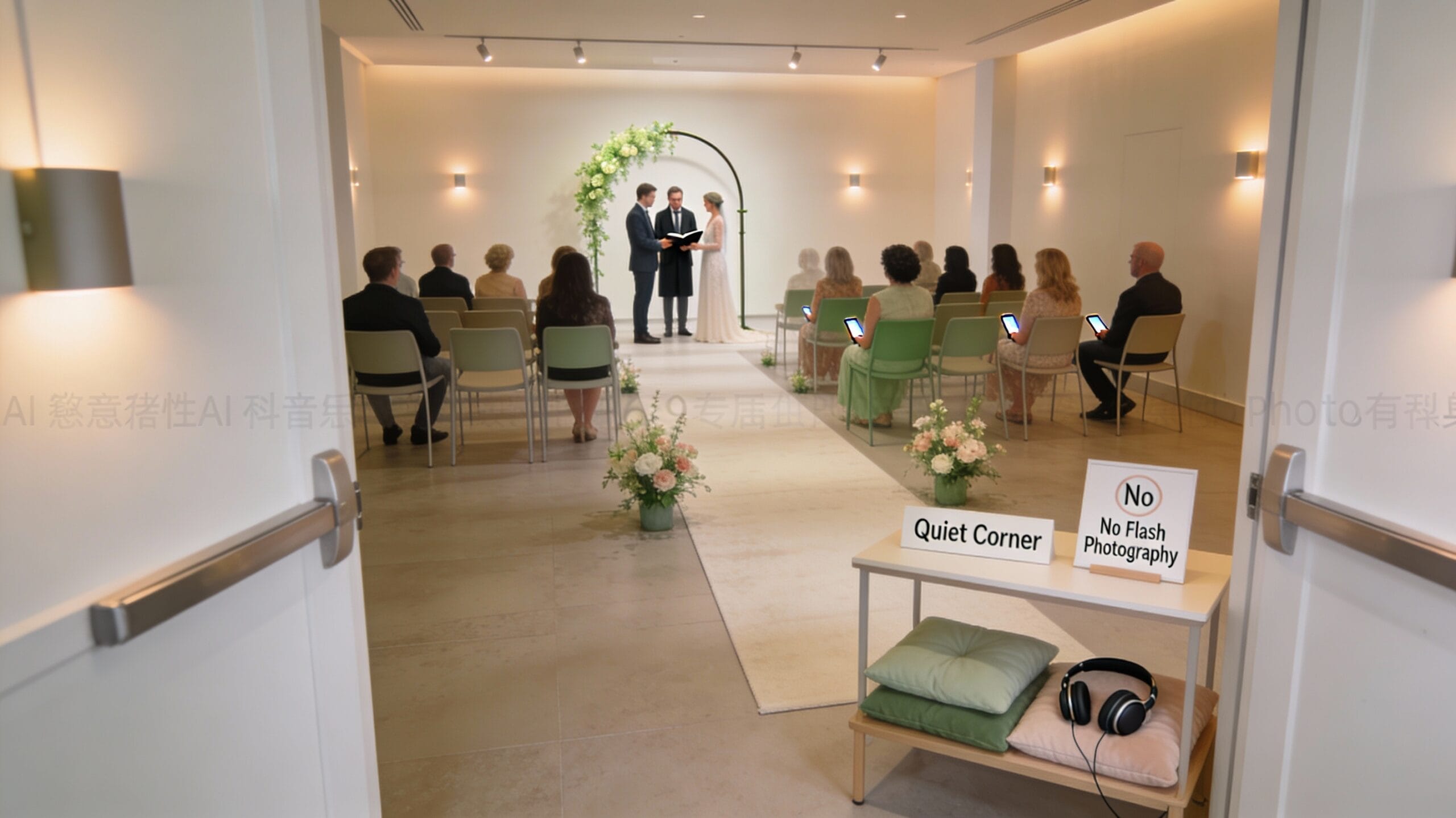
How to Plan a Sensory-Friendly Wedding at Your Venue
Weddings are joyful, emotional celebrations, but for some guests, the lights, sounds, crowds, and constant activity can feel overwhelming. As awareness around neurodiversity grows, more couples are choosing to plan sensory-friendly weddings that prioritize comfort, calm, and inclusion for everyone attending.
Whether you’re hosting guests with autism, sensory sensitivities, or anxiety, or simply those who prefer a quieter experience, thoughtful planning can transform your day into a truly welcoming celebration. Here’s how to plan a sensory-inclusive wedding at your venue without compromising beauty or atmosphere.
What Is a Sensory-Friendly Wedding?
A sensory-friendly wedding is intentionally designed to reduce sensory overload. This includes managing noise levels, lighting, crowd flow, and environmental triggers while offering flexible accommodations for guests who may be sensory-sensitive.
It’s not about stripping away celebration, it’s about creating a calm, inclusive wedding environment where all guests can feel relaxed and present.
Choose a Sensory-Friendly Wedding Venue
The venue plays a major role in sensory comfort. When evaluating spaces, look for venues that offer flexibility, privacy, and layout control.
Many wedding venues in Hamilton, wedding venues in Cambridge, Ontario, and outdoor wedding venues in Brantford provide quieter settings, adaptable floor plans, and outdoor spaces that naturally reduce noise and stimulation. Venues that already prioritize accessibility often adapt well to sensory-sensitive wedding accommodations.
When touring venues, consider:
- Availability of quiet or private rooms
- Natural lighting or dimmable lights
- Spacious layouts that avoid overcrowding
- Clear signage and easy navigation
Opt for Soft Lighting and Minimal Visual Stimulation
Lighting has a significant impact on sensory comfort. Bright, flickering, or coloured lights can quickly become overwhelming. A low-stimulation lighting plan helps maintain a peaceful atmosphere throughout both the ceremony and reception.
Instead, opt for:
- Soft, warm lighting
- Candles or lanterns for ambient glow
- Natural daylight for daytime ceremonies
- Avoiding strobe lights or flashing effects
Manage Sound Levels Thoughtfully
Loud music, overlapping conversations, and sudden noises are common sensory triggers. Creating a low-noise wedding environment makes a noticeable difference.
Helpful strategies include:
- Lower the background music during dinner
- Gradual volume increases for dancing
- Avoiding surprise sound effects
- Sharing a wedding timeline with guests in advance
For outdoor celebrations, following an outdoor wedding planning guide in Ontario can help balance sound, spacing, and guest comfort.
Create Quiet Spaces for Guests
A designated quiet area is one of the most appreciated sensory-inclusive wedding ideas. This space gives guests the option to step away, regroup, and rejoin when ready.
Quiet spaces can include:
- A small lounge or side room
- Outdoor seating away from the main activity
- Comfortable seating with minimal décor
- Noise-reducing elements like rugs or curtains
These areas benefit not only neurodiverse guests but also elderly attendees, children, and anyone who needs a moment of calm.
Be Mindful of the Wedding Layout and Capacity
Crowding is one of the most common and often overlooked triggers for sensory overload at weddings. Tight seating arrangements, congested walkways, and overlapping activity zones can make guests feel rushed, overstimulated, or even anxious. That’s why understanding your venue’s layout and planning guests flow intentionally is just as important as decor or catering.
Start by reviewing a wedding venue capacity guide, not simply to determine how many guests can fit, but how comfortably they can move through the space. A venue could technically accommodate all your guest count. However, with thoughtful spacing, you can creates a welcoming atmosphere.
When planning your layout, ensure:
- Adequate spacing between tables so guests can move freely without brushing past others.
- Clear, unobstructed walkways that reduce bottlenecks and confusion.
- Separate zones for dining, dancing, and socializing, allowing guests to choose where they feel most comfortable.
- Easy access to exits or quieter areas for anyone who needs a break from stimulation.
Having a well-planned layout supports a smoother flow throughout the event, helping guests feel at ease and allowing them to engage at their own pace.
Communicate Clearly with Guests
Clear, thoughtful communication can significantly reduce anxiety for sensory-sensitive guests. When people know what to expect, they are better able to prepare themselves and enjoy the celebration without feeling overwhelmed.
Sharing key details ahead of time allows guests to make informed choices about how and when they participate. This is a simple yet powerful way to create a more inclusive wedding experience.
Consider communicating:
- A detailed wedding timeline outlining major moments such as the ceremony, speeches, and dancing.
- Information about quiet spaces, or low-stimulation areas, is available at the venue.
- Notes about music volume, lighting, or outdoor elements, especially if there are sudden transitions.
- Contact details for venue staff or coordinators who can assist if a guest needs support.
This level of transparency is a core part of autism-friendly wedding planning. it reassures guests that their comfort has been considered, helping them feel respected, inclued, and genuinely welcome throughout your celebration
Choose Outdoor Settings When Possible
Nature naturally lowers sensory intensity. Many couples opt for sensory-friendly outdoor wedding venues to take advantage of open space, fresh air, and softer soundscapes.
If you’re planning outdoors, ensure:
Shaded areas for comfort
Seating away from speakers
Weather-appropriate accommodations
A Celebration Where Every Guest Feels at Ease
Planning a wedding is about more than creating a beautiful setting—it’s about creating an experience where everyone feels comfortable, welcome, and included. Thoughtful sensory-friendly wedding planning allows you to honour the diverse needs of your guests while still celebrating your love in a meaningful, joyful way.
By choosing the right venue, incorporating sensory-inclusive wedding ideas, offering clear communication, and providing flexible, sensory-sensitive wedding accommodations, you create a space where guests can engage at their own pace. Small adjustments—like softer lighting, quieter spaces, and mindful layouts, can have a powerful impact on how supported and relaxed your guests feel.
Whether you’re planning an intimate indoor celebration or exploring outdoor wedding venues in Cambridge, Ontario, prioritizing comfort and inclusivity ensures your day is memorable for all the right reasons. With a little intention and empathy, your wedding becomes more than an event, it becomes a celebration where every guest truly belongs.